
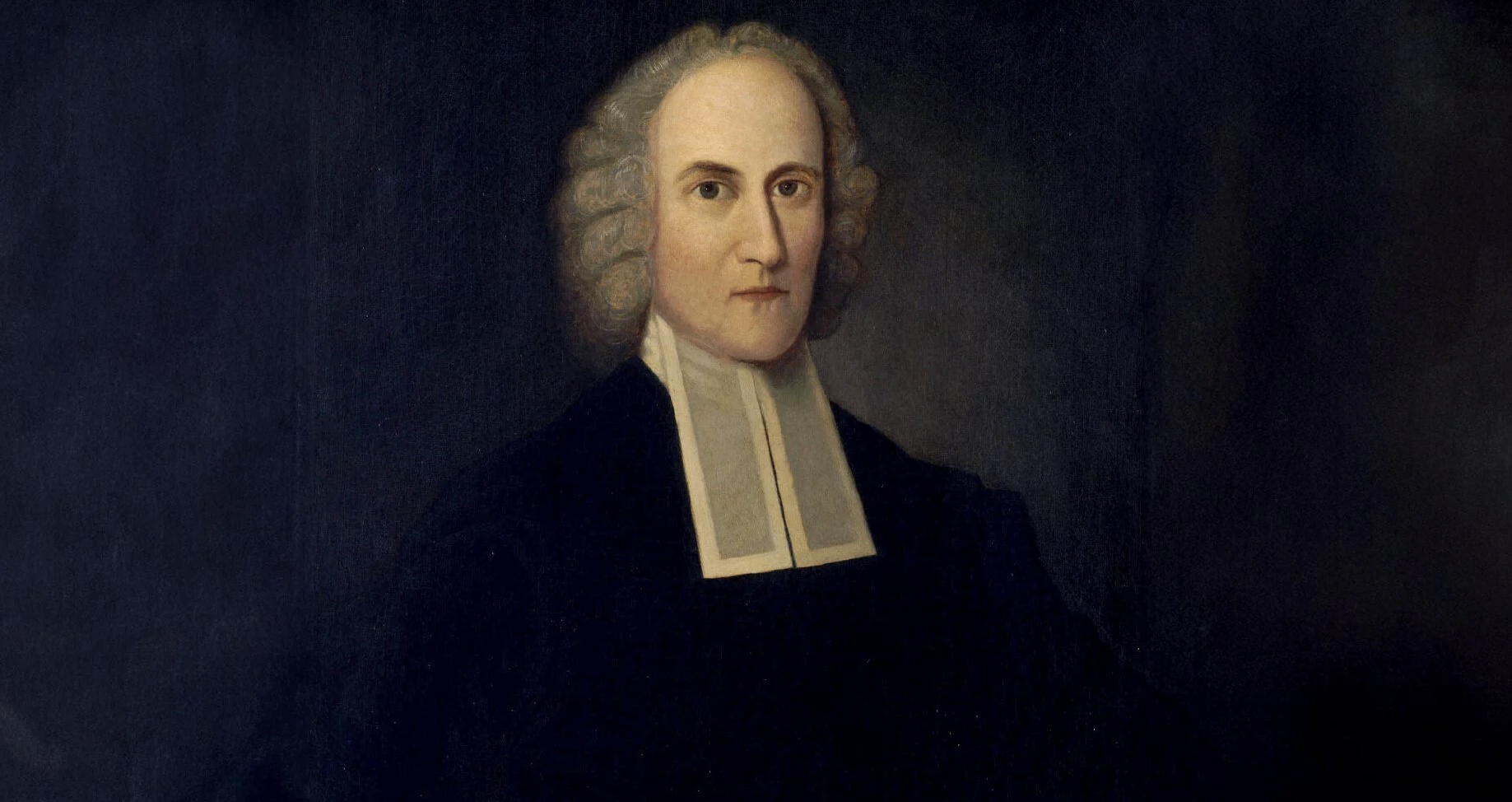
Men Who Carved the Path: Jonathan Edwards
6 minutes readOn July 8, 1741, in the village of Enfield, Connecticut, a quiet, thin-voiced preacher stood before a restless crowd. He did not shout or wave his arms. He read his sermon almost in a whisper.
His text was Deuteronomy 32:35
Their foot shall slide in due time.
He told them the truth that polite religion had grown afraid to say: that respectable people, religious people, healthy and comfortable people, were standing on ground that could give way, and that only the mercy of God was holding them up. Accounts say the room broke. People cried out. He had to pause.
The sermon was called "Sinners in the Hands of an Angry God." Most people stop there and remember Edwards as the preacher of terror.
They have missed the man. And they have missed the ending.
The resolution behind the sermon
At twenty years old, Edwards had written down seventy resolutions to govern his life. One of them explains everything:
Resolved, to endeavor to my utmost to act as I can think I should do if I had already seen the happiness of heaven and the torments of hell.
That was not a pose, and it was not only for the pulpit. He truly meant to live as if he had seen both. And his sermon at Enfield did not end in despair. It ended with an open door: Christ is offering mercy now, so flee to Him before it is too late.
He did not preach hell to frighten people. He preached it because he could not bear for them to walk past an open door of mercy.
The man who lived it
Six years later, a frail young missionary named David Brainerd rode into Edwards' yard. He was twenty-nine, dying of tuberculosis, and burned out from four years of carrying the Gospel on horseback to Native American tribes.
Brainerd died in the Edwards home on October 9, 1747. Edwards' seventeen-year-old daughter, Jerusha, had nursed him, and four months later she died too.
Edwards grieved. Yet he edited Brainerd's private diary and published it in 1749 so that others could see what surrender looks like. John Wesley told his preachers to read it. William Carey, Henry Martyn and Adoniram Judson carried it to India, Persia and Burma.
That same year, Edwards published An Humble Attempt, a call for God's people everywhere to unite in extraordinary prayer for the advancement of Christ's kingdom. Almost no one answered in his lifetime. But decades later, Carey and his friends read it, began praying monthly for the world, and in 1792 formed a missionary society. The modern missions movement was born.
Then, dismissed from his church in 1750, Edwards could have chosen any pulpit. Instead he took his family to the Stockbridge frontier and became a missionary to the Mohican and Mohawk people. For nearly seven years he preached through an interpreter, took Native children into his own home, and defended them against land-grabbers. He even sent his nine-year-old son away to learn the Mohawk language.
The man who preached Enfield did not stay in the pulpit. He did everything he could to reach the lost, and then he laid down his best years for them.
What sacrifice really looks like
Look closely at what Edwards did.
He edited a diary. He wrote a book almost nobody read. He prayed. He opened his home to a sick stranger. He moved to a frontier village.
None of it looked spectacular. Nobody applauded. Yet heaven took those small, costly acts and multiplied them until they moved across continents and centuries. Missionaries sailed. Nations were reached. Lives were transformed.
This is the heart of our faith. A boy's small lunch fed a crowd. A widow's two coins outweighed the offerings of the rich. A grain of wheat falls into the ground and dies, and bears much fruit. God has always taken what looks ordinary and, when it is surrendered, made it explode with supernatural power.
So a prayer for a nation may be the seed of that nation's turning. A few coins, given faithfully, may carry the Gospel to generations you will never meet. You may never see the harvest, and Edwards never did.
But transformation always costs something. It cost Brainerd his health. It cost Edwards his pulpit, his comfort and his daughter. The question is not whether obedience is costly. The question is whether we will pay.
How many will say yes, in spite of the cost and despite the loss, for the glory of Christ?
Romans 8:17-18 KJV
[17] and if children, then heirs; heirs of God, and joint-heirs with Christ; if so be that we suffer with him, that we may be also glorified together.
[18] For I reckon that the sufferings of this present time are not worthy to be compared with the glory which shall be revealed in us.
How to partner with the lord
Choose a missionary, a people, a nation, and carry them before God; if you are being called to go, do not talk yourself out of it; and if your offering looks small, remember that in God's hands, small is where miracles begin.
Edwards wrote,
Resolved, to live with all my might, while I do live.
Edwards is gone. The harvest is not.
Rise, pray, go, and give.
5 inspired